
Why the Church Matters
Published May 15, 2026
Why should the church matter to believers of Jesus Christ?
Unfortunately, the modern church has little significance for most people, including many professing Christians. This problem has been exacerbated since 2020, when many churches canceled in-person worship services in response to COVID-19 and instead promoted online “church.” Perhaps more than ever before, participation in a local church became entirely optional, and we were told by nearly every church in existence that an online worship service was an adequate substitute for the gathering of the saints. A number of men and women who ceased attending church in person in 2020 never returned to their local bodies, even though many of them still watch online.
Additionally, negative experiences within local congregations around the world have made the church distasteful to many Christians. Congregational divisions and splits often result in people wanting little or nothing to do with the local church. Some believe it is much easier to watch online, where we don’t have to deal with problem people, than to be part of the “messy” local body of Christ. Men, women, and children have been hurt, slandered, gossiped about, and mistreated by others in church; and they don’t see the benefit of being part of a church, when that time tends to come with much pain and difficulty.
So, why should Christians care about the local church? This is a significant question for the 21st Century as it was in Paul’s day.
Paul’s answer to this question in 1 Corinthians 3:16-17 probably comes as quite a shock to our modern, consumer-minded mentality about the church (what the church can provide for us). His answer is not based on what the church does for people or how people are treated by others in the church. Rather, his answer is based on what the church is in itself, setting forth a staggering vision of why the church should matter to Christians.
We can break this passage down into three pairs of explanations: two truths, two consequences, and two applications. We’ll start with the truths, which are foundational to understanding the nature and significance of the local church.
The first truth is that the gathered church is God’s temple.
“Do you not know that you are a temple of God”
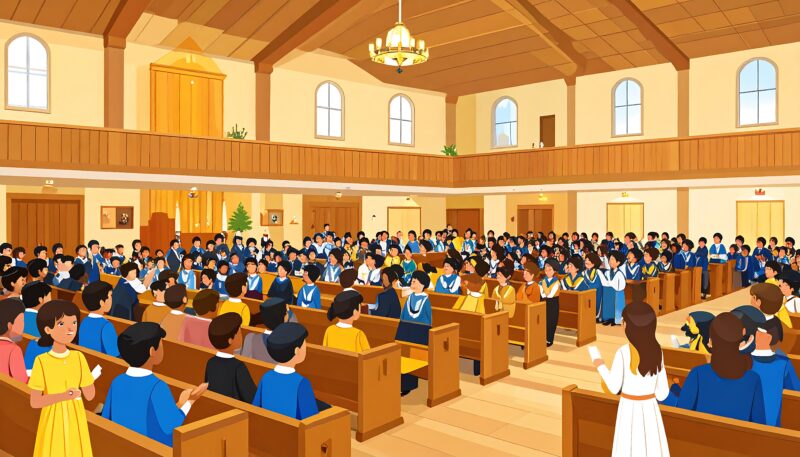
This declaration from Paul is often overlooked when we think of ourselves as the temple of God. Paul’s point is not that each believer, individually, is a temple of the Holy Spirit; but that the gathered church is God’s temple. When Christians meet for worship, we are the temple of God. Something powerful occurs as we come together as believers in Jesus Christ to sing, to pray, to preach, to listen, to fellowship, to eat the Lord’s Supper, and to do all the things Scripture commands for worship as the body of Christ.
We see this theme, of the church being the temple, throughout the New Testament. In 2 Corinthians 6:16, Paul informs us that we, the church, are the temple of God. In Ephesians 2:19-22, Paul notes that the church is growing into a holy temple in the Lord. Peter makes the same point in 1 Peter 2:4-5, where he writes that the church is being built up as a spiritual house or temple – with Christ as the cornerstone.
As we see from these passages (and others in Scripture), 1 Corinthians 3:16 is not an isolated verse, but it is part of a wider temple theology woven throughout the New Testament teaching that the gathered church is the temple of God.
There’s a second truth that builds upon the first one in the second half of verse 16, that God’s Spirit dwells among His gathered church.
“Do you not know that you are a temple of God and that the Spirit of God dwells in you?”
Again, this verse has nothing to do with the Spirit indwelling the individual believer, but everything with the Spirit dwelling among God’s gathered people as His temple. The Holy Spirit, of course, resides within each individual Christian, yet there is a different experience of the Spirit that occurs when believers gather collectively as the body of Christ. We experience the Spirit, not only dwelling within us, but working among us as God’s corporate people.
The church, then, is not only a human gathering. When we gather together for worship, we are not by ourselves, distant from God. We also are not here merely as individuals, worshiping God separately with our own private experience of the Holy Spirit. We are here corporately, all experiencing the work of the one Spirit of God as we meet for worship. This a divine experience because the Spirit of God comes among His people, works in our hearts, binds us together, and sanctifies, helps, convicts, encourages, and changes us.
It’s important to understand that the indicator of our identity as the temple of God is the presence of the Spirit among us. The word that Paul uses for “temple” in this verse is a technical term that referenced to the holiest place in the temple where God’s glory dwelled. It referred almost exclusively to the temple of the true and living God, not to the temples of idols; and it was specifically reserved to speak of Solomon’s temple and the place of divine glory in that temple. The translators were so specific with this term that they avoided using it to refer to the rebuilt temple after the exile because the glory of God never filled that temple. This is the exact term Paul uses to identify the church as God’s temple, the holiest place, where the Lord Himself dwells and His glory is manifest.
Furthermore, the presence of the Spirit among us collectively indicates that the temple of God is to be one residence. The one Spirit dwells within God’s one temple, which was a rebuke to the Corinthians with their quarreling and divisions. How could Corinthian Christians separate into factions when the Spirit dwells among all of them as God’s holy temple? How can they put one leader over another when the Spirit of God works in the church collectively? How can they have any spiritual pride over others in the church when the glory of God is manifest, not just in one part of the church, but in the collective gathering of the whole church?
These two truths, then, should shape the way we think about the importance and significance of the church.
The church matters, not just because of what it does, although these actions are vital. However, the church matters because of what it is: the church gathered is the temple of God, the place where God’s Spirit dwells among His people.
Related Posts
Reflections
Do Not Attempt to Destroy God’s Holy Temple
June 9, 2026

Reflections
The New Covenant Temple of God
May 29, 2026
Reflections
A Refutation of Infant Baptism
May 26, 2026
0 Comments