
All Things Belong to You
Published June 25, 2026
Nothing is more dangerous than to be self-deceived.
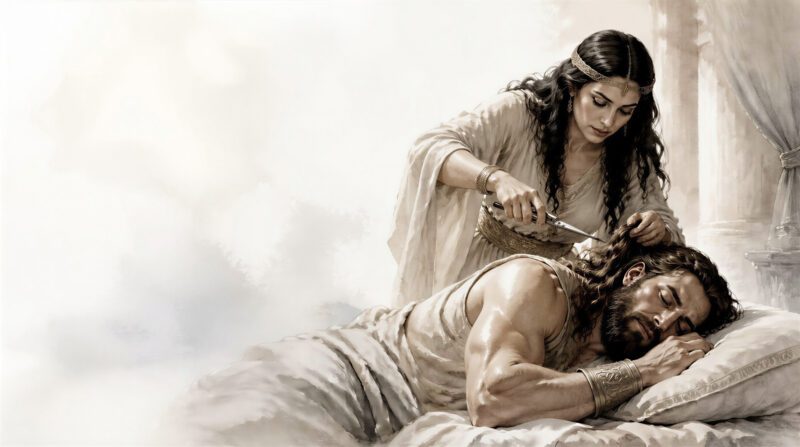
Samson’s great downfall in the book of Judges involved self-deception about his spiritual power, thinking he was strong enough to have a relationship with a wicked woman and not corrupt his own heart. His inaccurate self-assessment led to horrific consequences.
The problem of self-deception is not isolated to Samson but is common throughout the New Testament. In Romans 12:3, Paul wrote that Christians were not to be self-deceived about their spiritual maturity or giftedness. Additionally, Paul told the Galatians that if they thought they are more spiritual than they were, they were self-deceived (Galatians 6:3).
It’s staggering how easily we deceive ourselves. This self-deception occurs because the prime organ is our own wicked hearts. While we are surrounded by deception from the demonic and deceiving forces of this present age from media, entertainment, education, or whatever else the world has for its megaphone, the real problem lies within all of us.
In 1 Corinthians 3:18-23, Paul deals with this critical issue of being self-deceived. Paul is not talking here about being deceived by outside forces, by the wiles of the devil, or by the doctrines of demons. Instead, he addresses our consistent tendency of self-deception.
So, what might we deceive ourselves about?
In the context of this chapter, Paul has addressed two fundamental issues, helping to decipher the roots of our self-deception.
The first is spiritual maturity. Christians can all-too-easily think we are more spiritually mature than we really are. The second is spiritual impact. Many people have an inflated view of themselves simply based on external observation or internal perception of their giftedness. When Paul tells us not to deceive ourselves, then, the primary areas of concern are self-deception about our spiritual maturity or impact (verse 18).
So, how can we know if we have deceived ourselves? Self-deception is like a labyrinth from which we cannot escape with our own strength and insight. We need an external standard – something outside ourselves – to expose the reality of our spiritual maturity and impact.
Paul gives two indicators of self-deception for believers to examine our maturity and ministries to shine light on our walk with Christ and the building of His church.
The first indicator is that we pursue human wisdom (verses 18-20).
Paul returns to the original problem of his rebuke of the Corinthians’ divisive behavior, that they were enamored with wisdom of this age. Again, this is not highlighting particular skills or knowledge believers or unbelievers might have. Rather, Paul is addressing the philosophical ideas and beliefs of this age – or what this age uses to guide itself toward understanding life’s purpose and solutions.
If we defy the wisdom of this age, the world is certain to berate us. The temptation for Christians, then, is to find some kind of middle path or third way between the wisdom of this age and the cross. Tragically, we see these compromises repeatedly with church leaders and professing Christians softening biblical stances on things like human sexuality, the pursuit of joy and happiness, psychology, and any number of contemporary issues, to appear wise to the world. Typically, this capitulation does not begin as a wholesale capitulation to worldly thinking but as an attempt to blend modern philosophy with biblical wisdom.
Paul also presents the solution to this problem (verse 18).
If we think we are wise in this age, accepted the philosophies of the world, or imitated the world’s outlook on anything in life, here’s the solution: become a fool! Paul is not using fool in the literal sense, but in an ironic or sarcastic sense. To become foolish, then, is not to jettison true wisdom, but the world’s wisdom, returning to the purity of the gospel of Christ.
The purpose of availing ourselves of this solution is so we might be truly wise. Those who deceive themselves must abandon the world’s so-called wisdom and solely cling to God’s Word. When Paul calls us to course correct by abandoning the world’s philosophies and holding only to the Scriptures for wisdom, he enables us to become those who are truly wise in God’s sight.
The reason we must abandon the world’s wisdom is because it is foolishness before God (verse 19). It masquerades as wisdom, but it has nothing of true wisdom in it because it rejects the cross, where God’s wisdom is truly found.
The proof of this truth is found in Scripture as Paul cites two Old Testament passages. The first is from Job 5:13, where Eliphaz rightly recognized God captures the wise by their own shrewdness. In other words, the trap God lays for those who are wise in this world is their own wisdom – or folly. The second is Psalm 94:11, where the psalmist makes clear that the thoughts of these senseless fools, who consider themselves wise, are a mere breath. They will quickly be replaced by another useless bag of wind.
Paul is being harsh, but not cruel, because of how easily Christians are deceived. Some believers are so entrenched in worldly wisdom that they need a loud wakeup call to see how stupid it is to abandon the Scriptures or to merge the world’s philosophies with true theology. If we are not content to have the world consider us foolish for loving Christ, then we are self-deceived.
The second indicator of self-deception is that we praise human leaders (verses 21-23).
This problem is ascribing to human leaders praise we should only ascribe to the Lord. We can, and should, appreciate those who minister God’s Word to us; but we should never exalt them or give them credit for what God alone can do.
The command Paul gives, then, is to stop boasting in men (verse 21). The reasons Paul gives as justification for this order are incredible, starting with the first: “all things belong to you.” Christians have infinite blessings in Christ Jesus! Everything is for our good, including all faithful preachers of God’s Word, everything in this world, our lives, our deaths, our present, and our future. Our Lord has designed it all to work for us rather than against us.
The second reason is because we belong to Christ. Our boast should not be in men, but in the Lord, to whom we graciously and gloriously belong. The final reason Paul gives is that Christ belongs to God in His role as the Messiah. All Jesus’ Messianic work was done in obedience to and for the glory of the Father. The glory of God and the good of God’s people are inseparable; and since we know that Christ did all for God’s glory, we know all He did was for our good, too.
How can people, who possess all things and who are possessed by God, find their significance in human leaders or their direction in human wisdom? If we are discovering our significance in other people or our direction in the wisdom of this world, we have deceived ourselves.
Remember Samson was self-deceived, yet he is listed in the Hebrews 11 ‘Hall of Faith.’ Samson was a true believer in God, but he was self-deceived because he acted contrary to God’s Word.
All believers, too, can be self-deceived by overestimating our spiritual maturity and impact. When we begin to gravitate toward the wisdom of this age, or we find our significance in something other than the gospel, our hearts quickly fall prey to self-deception.
Are our hearts, minds, and actions marked by submission to God’s Word without intermingling the world’s philosophies? Do we find our strength, not in human identity or boasting, but in complete dependence on all God is for us in Christ? When we submit to Scripture and depend on Christ without reservation, we guard our hearts against self-deception.
Related Posts

Reflections
Your Obligation to Build Christ’s Church
June 18, 2026

Reflections
Do Not Attempt to Destroy God’s Holy Temple
June 9, 2026

Reflections
The New Covenant Temple of God
May 29, 2026
0 Comments