
Your Obligation to Build Christ’s Church
Published June 18, 2026
As we continue with our series on why the church of Jesus Christ should matter to believers, we have seen from 1 Corinthians 3:16-17 that the apostle Paul based his answer on what the church is in itself. The church is of vital importance because it is the temple of God!
Previously, we have discovered two truths and two consequences for the nature and significance of the local church being the temple of God. Now, we will uncover two applications of these truths and consequences.
The first application is that we must become what we are.
When we think about the holiness of the church – but pause to consider our own unholy thoughts, words, or conduct in the struggle with the presence of sin – we grapple with the importance of seeking holiness and sanctification. However, we must also realize the Lord’s call to be holy is not merely for individual holiness, but for the church collectively to be the holy people of God in our gatherings, fellowship, studies, and worship.
I love how Paul ends verse 17: “That is what you are.”
Christians are God’s holy temple – this is an indisputable, unalterable fact. That statement from Paul is meant to put upon us, not just the joyful reality of what God has done for us in calling us to Himself, but the incredible responsibility of living out the Lord’s calling for our lives. We are called holy by God as His saints, but we are also required to become holy in words and deeds.
When we think about ourselves and our relationship to the church, do we think, not only that we are called to be holy, but that we are called to be holy in the context of God’s covenant community, the church? Do we realize we are called to be holy amidst a holy people who are set apart for God? Do our hearts yearn, not only for our own holiness, but to see God’s people in the local church manifest His holiness in our lives together?
That leads to a second application, which is an exhortation to build up – not to tear down.
Believers should want to be known as builders, not demolishers, of Christ’s church. When our heart’s desire is not only for our own holiness, but for the holiness of all God’s people in the church, then we will feel burdened to build up the body of Christ, rather than to tear it down. Our great longing should be to see people growing in their faith, holiness, and Christlikeness.
Thinking about God’s church as His holy temple moves us out of the seat of being a critic and a cynic, and into the position of being a contributor to the growth of the church toward holiness. That’s not to say criticism is never needed in the church. However, when we consider ourselves as builders of the church, our criticisms will always come with the goal of building rather than tearing down.
If we step back to look at 1 Corinthians 3 as a whole, we see Paul outlines three groups of people here in this chapter. The first group are the quality builders – those who build the church with gold, silver, and precious stones, whose work survives the testing fires of God’s judgment, resulting in a reward (verse 14).
The second group of people are the careless builders – those who build with wood, hay, and straw (verse 15). Their work does not survive the inspection of God’s fiery judgment, and their efforts at building are consumed so they suffer loss on the final day. However, Paul says, the careless builder is still saved.
Why is the careless builder a genuine believer and not a false convert? It’s because the careless builder is still seeking to build the church of Jesus Christ. This person cares enough about the church to try to contribute to its construction. He does a poor job of contributing, and his work does not last; but he is still a builder.
The last group of people are the destroyers of the temple, and they are condemned (verse 17). Rather than seeking to build – even carelessly – these individuals want to tear down and destroy. The growth and edification of the church is not their aim. Instead, they desire to damage the church.
We must emphasize this is not the universal, invisible church referred to in this passage, but the local church. These individuals have set their sights on destroying local bodies of believers, where the gospel is preached and the Spirit is present. They don’t build up; they tear down, and their end is condemnation, because corruption always leads to condemnation.
Christians should always be characterized as those who build up the local church, rather than tear it down! It’s easy to be a critic because, like in Corinth, all local churches have problems. However, tearing down what God is doing in His temple is never the Lord’s will. God desires for His people to build carefully with the highest quality materials.
When I was in seminary and leading the children’s ministry at a local church, I came across a ministry teacher who was a false believer and did not believe in the deity of Christ. I was 23 years-old and had no idea what to do about it, so I called up one of my professors at The Master’s Seminary and asked if he would meet with me to discuss the situation. We got together, and I told him the whole story. I’ll never forget what he did when I got done explaining it to him.
He opened his Bible to 1 Corinthians 3:17 and read me this verse. He then told me that if the leadership did not want to remove this man from teaching, I should leave that ministry; but that I should do everything in my power not to destroy that church when I left, because that church, even with its problems, belonged to Jesus. Due to this truth, I had no business destroying Christ’s church.
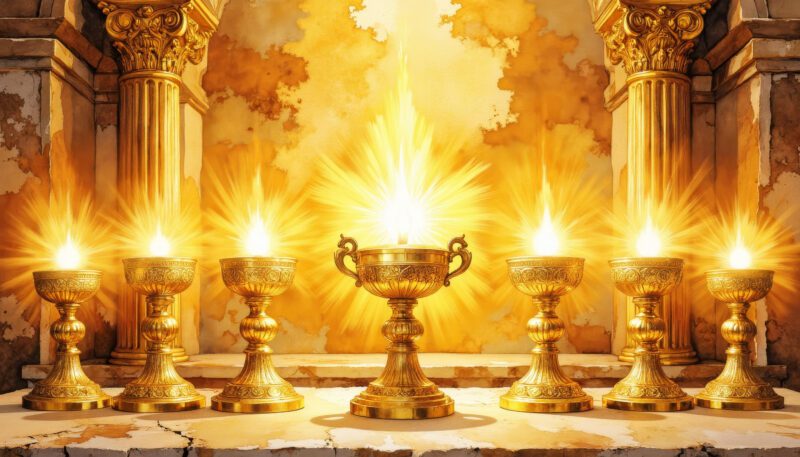
This professor also warned me that if I deviated and decided to speak evil of this church, seeking to ruin it, I would be asking for God’s destruction on myself. God would judge His people, and Christ will rule His church – and only He has the right to destroy it. In the book of Revelation, Jesus tells His churches that are in sin that if they do not repent, He will remove their lampstands. It always must be Christ who performs this action, never His people.
So, I left quietly, and as I found out recently, that church does not exist today. I can live with a clear conscience, knowing that I was not responsible for that church folding, but that Christ Himself removed their lampstand.
Christians must be careful with how we handle Christ’s church. We should recognize our obligation is to build, not to destroy. And we must recognize that as God’s holy people, our responsibility is to become what we are in Christ, so that the church collectively reflects His holiness.
Related Posts

Reflections
Do Not Attempt to Destroy God’s Holy Temple
June 9, 2026

Reflections
The New Covenant Temple of God
May 29, 2026
Reflections
A Refutation of Infant Baptism
May 26, 2026
0 Comments