Christ’s institution of the Lord’s Supper has been a source of endless controversy throughout church history. In this post, we will look at two questions that theologians have debated for centuries. What do we hold in our hands when we have the bread and the cup? And, what happens when we take communion? The response to the first question inevitably demands certain answers to the second.
These questions are derived from how we interpret Jesus’ statement in Luke 22:19: “This is My body.” The corollary statement is in verse 20: “This cup is the new covenant in My blood.” Walking through the four main views of this statement will clarify our understanding of its meaning.
The first view is transubstantiation.
Transubstantiation simply means the substance of the bread and the wine is transformed into Jesus’ physical and literal body and blood when consecrated by the priest during the Mass. The Roman Catholic Church traced this understanding back to the early church, claiming this was the view held by the church fathers.
However, one problem with discerning the specific view of the early church fathers is that none of them were privy to later controversies. They might have been more careful in how they described Christ’s presence in the bread and the cup, for example, if they knew about transubstantiation as Rome defined it. Because the presence of the body and blood of Christ in the elements was not a controversial issue, they did not speak with the precision we would expect from later theologians who were part of this debate. Therefore, it’s not surprising that Roman Catholicism appeals to the church fathers for support for their position, but it’s also a meaningless appeal because so do all the other viewpoints. Their writings on the subject can be harmonized with multiple viewpoints, and conclusions about what they believed typically reflect the position of their readers rather than that of the fathers themselves.
The first father to speak clearly here was Augustine. He defined a sacrament as an outward sign of an invisible, yet genuine, grace. Augustine went further, however, saying God’s grace is channeled through the sacrament with Christ physically present in the bread and cup.
Augustine realized there was a significant problem with Christ being physically present in the bread and wine and in heaven simultaneously. He therefore concluded that Jesus was physically present in His spiritual body and blood, not in His historical body and blood. Augustine’s view of the Lord’s Supper was not full-fledged transubstantiation but certainly pushed theologians toward it.
In 831, a theologian named Paschasius Radbertus took Augustine’s view further, writing, “The flesh which was born of Mary and suffered on the cross and rose from the dead” was the very body present in the bread and with the blood. This position became official church doctrine in 1215.
However, the bread still looks, feels, smells, and tastes like bread – as does the cup like wine. To answer this riddle, theologians revived a philosophy of Aristotle, who taught that everything is made of two components: its substance (what it really is), and its accidents (what it appears to be to the senses). The church theologians took this concept of substance and accidents, and they said the bread and wine become Christ’s flesh and blood through a double miracle. The substance is changed into the literal, historical body and blood of Christ, while the accidents remain unchanged as bread and wine. These philosophical gymnastics helped explain the meaning of transubstantiation
It was then a short step to affirming two more problematic things. First, people should worship the bread and wine after it was consecrated – because Christ was the substance. Secondly, Christ is sacrificed anew when the elements are consecrated, bringing the Lord’s grace and forgiveness for dead people who have not yet been fully purified and pardoned.
The Reformers understood Roman Catholic theology taught people to worship idols instead of Christ when they adored the bread and wine – and doing so in Jesus’ name. These were not quibbles over secondary matters. Rather, this was an assault on the sufficiency of Christ’s atonement and the pure worship of Christ.
A second view on the Lord’s Supper is consubstantiation.
Martin Luther rejected Roman Catholic teaching about the Lord’s Supper, devising another system to understand this ordinance. First, he said the Lord’s Supper is a promise that designates God’s inheritance, the forgiveness of sins, to His heirs. Furthermore, Luther taught that the Lord’s Supper is not a sacrifice but a gift.
Luther’s teaching corrected many of transubstantiation’s problems. He emphasized the need for faith and the sufficiency of Christ’s one sacrifice on the cross for our sins. However, Luther still had to answer the question of what the elements are, and he maintained with Rome that Jesus’ words of institution were literal.
Luther said the substance of Christ’s body and blood was present “in, with, and under” the elements. R.C. Sproul compared this view to how one might understand a sponge and water. When a sponge is filled with water, the substance of both the water and the sponge are together. So, Luther understood Christ’s body and blood and the elements. The bread did not cease to be bread, but Christ’s body was present in the bread much like water would be present in a sponge.
Luther still had a problem: How could Christ’s body be physically present in the bread? Christ is presenteverywhere, but not physically present everywhere. However, Luther’s view demanded Christ be physically present everywhere. Most Reformers found Luther’s view deficient because it was unable to articulate a convincing answer to this objection.
Some Reformers thus defended the memorial view, which was taught by Huldrych Zwingli.
Zwingli argued primarily against transubstantiation. He asserted that Christ’s glorified body is not physically present in multiple places simultaneously any more than human bodies. Therefore, transubstantiation cannot be correct because Christ is physically in heaven in His glorified human body, not physically on earth.
Furthermore, Zwingli said Rome misunderstood the word sacrament. A sacrament is only a sign of a holy thing, with the emphasis on the sign element. The sign of Christ’s body and His body cannot be the same thing any more than my picture can be me.
So, Zwingli made the case for a figurative understanding of Luke 22:19. When Jesus lifted the bread, saying, “This is My body,” He did not mean – and the Apostles did not understand Him to say – that the bread was His physical body. Christ’s physical body was in front of them.
Zwingli, then, addressed Luther’s inconsistencies. A literal interpretation of Jesus’ words should lead, not to consubstantiation, but to transubstantiation. Every argument against one view is an argument against the other. Luther was not really far enough away from Rome.
Additionally, Zwingli argued that the sacrament is a sign of Christ’s holy sacrifice for us, but it is not that sacrifice itself. It is therefore to be understood as a memorial of Christ’s sacrifice. Since Christ’s sacrifice is received by faith, not by eating physical bread or drinking physical wine, coming to the Lord’s table demands saving faith in Christ. Finally, when we come to the Lord’s Table, we profess devotion to Christ, much like we did at our baptism as believers, or, in Zwingli’s view, as parents did when they had their infants baptized.
Zwingli correctly understood Christ’s words of institution were symbolic. Jesus did not mean the bread was physically His body, nor would the apostles have understood it that way. Further, Zwingli emphasized the necessity of faith when coming to the Lord’s table. Like Luther, he stressed that the elements do not automatically convey grace through our participation, but that we must come with sincere faith in God’s work through Christ to derive any benefit from the Lord’s Supper.
Right here, though, we note a problem in Zwingli’s view. It’s not altogether clear what benefit we derive from the Lord’s table from his position. Is there any blessing or benefit? Is it really a bare memorial, or an act by which we declare something to God, but He does nothing for us?
This leads to the fourth view, which the spiritual presence view.
Zwingli rightly pegged the bread and the wine as symbols, but Scripture also describes God’s work for us when we come to the Lord’s table. What does God do for us, and is Christ present spiritually at the table in a unique way? We’ll consider that in the next post.

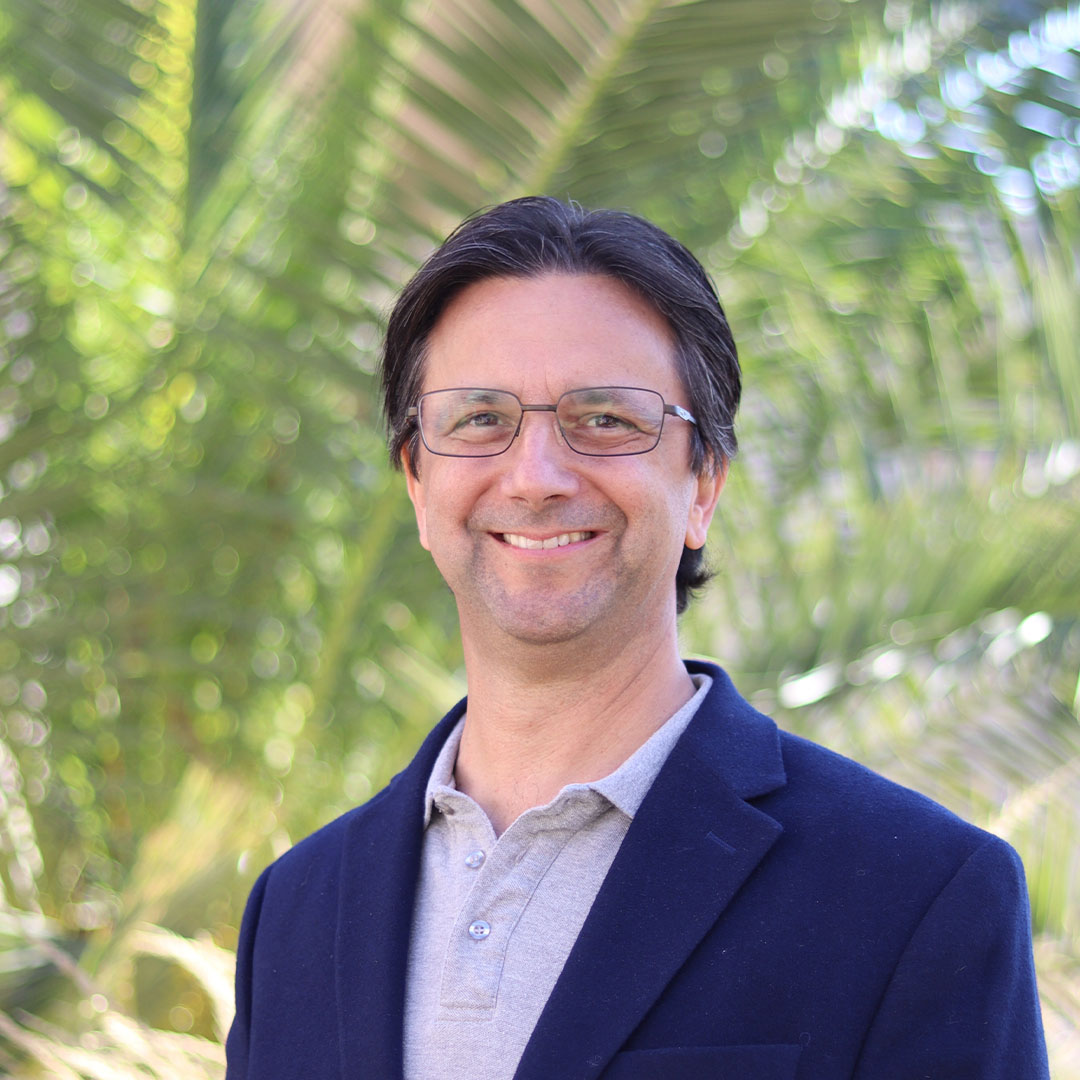
Pastor Robb has been the pastor-teacher of DHBC since March 2011. He earned a Master of Divinity (M.Div.) degree from The Master’s Seminary in Sun Valley, CA, and a Doctor of Philosophy (Ph.D.) degree from The Southern Baptist Theological Seminary in Louisville, KY. Pastor Robb and his wife Randi have been married for over twenty years and have four children: two daughters and two sons. They enjoy travel, hiking, baseball, and the beach.
One of Pastor Robb’s favorite verses is 1 Corinthians 1:18: “For the word of the cross is foolishness to those who are perishing, but to us who are being saved it is the power of God.” In addition to preaching weekly, Pastor Robb enjoys hosting the podcast Relentlessly Biblical. You can find him on X at @RobbBrunansky.