In my estimation, the most contentious issue concerning the Kingdom of God is how to understand it in the present age and its relationship to the church. The issue is also the most consequential because of the immense impact it has on how we live in and relate to the world as believers.
Four Views on the Kingdom’s Present Status
There are four mainstream views that merit consideration as we think about the status of the Kingdom of God today.
The first view is that the Kingdom of God is present now spiritually, which fulfills the prophecies in the Old Testament about a future kingdom as well as what Jesus taught during His earthly ministry. This view has been very popular through church history. It takes prophecies in the Old Testament about things like land for Israel or the nations streaming to Jerusalem, saying those are now fulfilled in Christ. According to this view, Christ is the fulfillment of the land promise, and the true Jerusalem is a spiritual, not an earthly, reality. Yet the Bible indicates that the kingdom is not merely spiritual, but that there are physical elements to it.
A second view is one that says the Kingdom of God has not yet begun but will be established in the future. This view is the exact opposite of the first, that says the present age is the fulfillment of the kingdom promises in the Old Testament and in the teaching of Jesus. It also falls short of being faithful to the biblical teaching about the Kingdom in this present age. No one can correctly say the Kingdom is connected to this age but has not yet begun.
A third view, which has gained immense popularity recently is that the Kingdom of God and the church are the same thing; and because of this connection, the church should seek to exert political control over the world, so the earthly nations become the Kingdom of God under the authority of the church. This view differs from the first, because it seeks to make the spiritual kingdom a reality in the present world through political dominance and power, seeing the Kingdom of God in this age, not only as spiritual, but also political. Some assert we will experience the glories of God’s Kingdom in this age, thinking the promises of the kingdom will be fulfilled before Christ’s return in this fallen world.
In distinction from each of these three views is the view I believe is most closely aligned with the biblical teaching, which is that the Kingdom of God has been inaugurated in the present time but awaits fulfillment when Christ returns. The Kingdom is already here in a certain form, but it is not yet here in its final, consummated form, which will not happen until the Lord returns. Some of the Old Testament prophecies and the teachings of Christ concerning the Kingdom are already fulfilled now in the present age through God’s new covenant people, the church; but others have not yet been fulfilled and await the age to come.
The Biblical Case for an Inaugurated Kingdom
A biblical understanding of the present form of God’s Kingdom matters, because some wrong views can lead to unbiblical atrocities in the name of Christ and His kingdom (as we have seen throughout history). However, there are some positive reasons, too, why this correct understanding is important. To this end, we should consider the inauguration of the Kingdom.
If the Kingdom is present now, that means it must have started previously in some form. Scripture’s basic position is that the Kingdom was established in heaven when Christ rose from the dead and ascended into heaven. We can call these events Christ’s enthronement. As a result of His resurrection and ascension, Jesus has established and inherited His Kingdom rule, as we see throughout Scripture.
Two passages of Scripture help clarify this point. The first is Acts 2, which was Peter’s first sermon after Jesus’ ascension to Father’s right hand. Peter quotes Psalm 16 to show that the promise from the Old Testament was the Messiah would be raised from the dead. David, being a king and a prophet, spoke of the resurrection of the Messiah, recognizing that for God to fulfill this promise would require new creation through resurrection. Then Peter amazingly quotes Psalm 110:1 – the enthronement psalm, where Yahweh establishes David’s Lord as king over all! Peter understood the resurrection and ascension of Christ kicked off the kingdom of God under Jesus’ reign.
The second passage is in Romans (Romans 1:1-5). When Paul mentions he is preaching the gospel of God in fulfillment of the Old Testament concerning the son of David, he can only mean he is preaching the Kingdom of God under the reign of that Son. This passage connects Jesus’ kingly reign as the son of David to His ascension to the Father’s right hand, where He is now as He pours these things out through the Spirit. Paul and Peter thus make the same connections: Jesus is the Davidic king, ruling by virtue of His resurrection and ascension; and the pouring out of the Spirit of grace is proof that the Kingdom has begun.
The kingdom has thus been inaugurated. It is not waiting to start in the future when Christ returns. Jesus is reigning now over His kingdom, and He assumed His royal reign through resurrection and ascension, which we might call together new creation.
Further evidence of the inauguration of the Kingdom comes from Christ’s commission to the disciples. The King commissions His apostles, who form the foundation of the church, with Christ being the cornerstone, to go to all the nations and make disciples of Christ, who will publicly identify with Him through baptism and then follow Him in obedience to His commands (Matthew 28:18-20). These will be kingdom citizens, and the church will be the kingdom manifest on earth.
The apostles understood the kingdom in just this way during the present age. Peter, speaking to Christians, said we are a royal priesthood and a holy nation, recalling what God made clear to Israel (1 Peter 2:9-10, Exodus 19:5-6). The church is not a geopolitical nation, nor could it be, because the church is multinational; and, even more importantly, holy, which none of the nations of the earth have ever been. Not even Israel under the Mosaic covenant was able to live up to this calling; and because they failed, they went into exile.
Paul makes the same point that we are the present form of the Kingdom of God on earth. He said that those who have been truly converted have been rescued from Satan’s kingdom, and that we have been transferred into the Kingdom of God’s beloved Son (Colossians 1:13-14). This work is an accomplished fact, not a future hope. We can say truthfully that we are already in the Kingdom of God now as Christians.
Paul highlights this point again, saying that our citizenship is in heaven even now (Philippians 3:20-21). Believers are not waiting for citizenship in heaven, but we have obtained it already while waiting for Christ to return. That fact means the kingdom exists presently; we are citizens of it, and that reality is true even while we wait for the full glory of the Kingdom to come.
Conclusion: Inaugurated But Not Consummated Kingdom
Christ, then, is reigning now because of His resurrection and ascension. He is King now. He reigns from the Father’s right hand, and His Kingdom is on earth in those who are Kingdom citizens because they’ve been rescued from Satan’s kingdom and transferred into Christ’s Kingdom, making them a holy nation and a priesthood of kings.

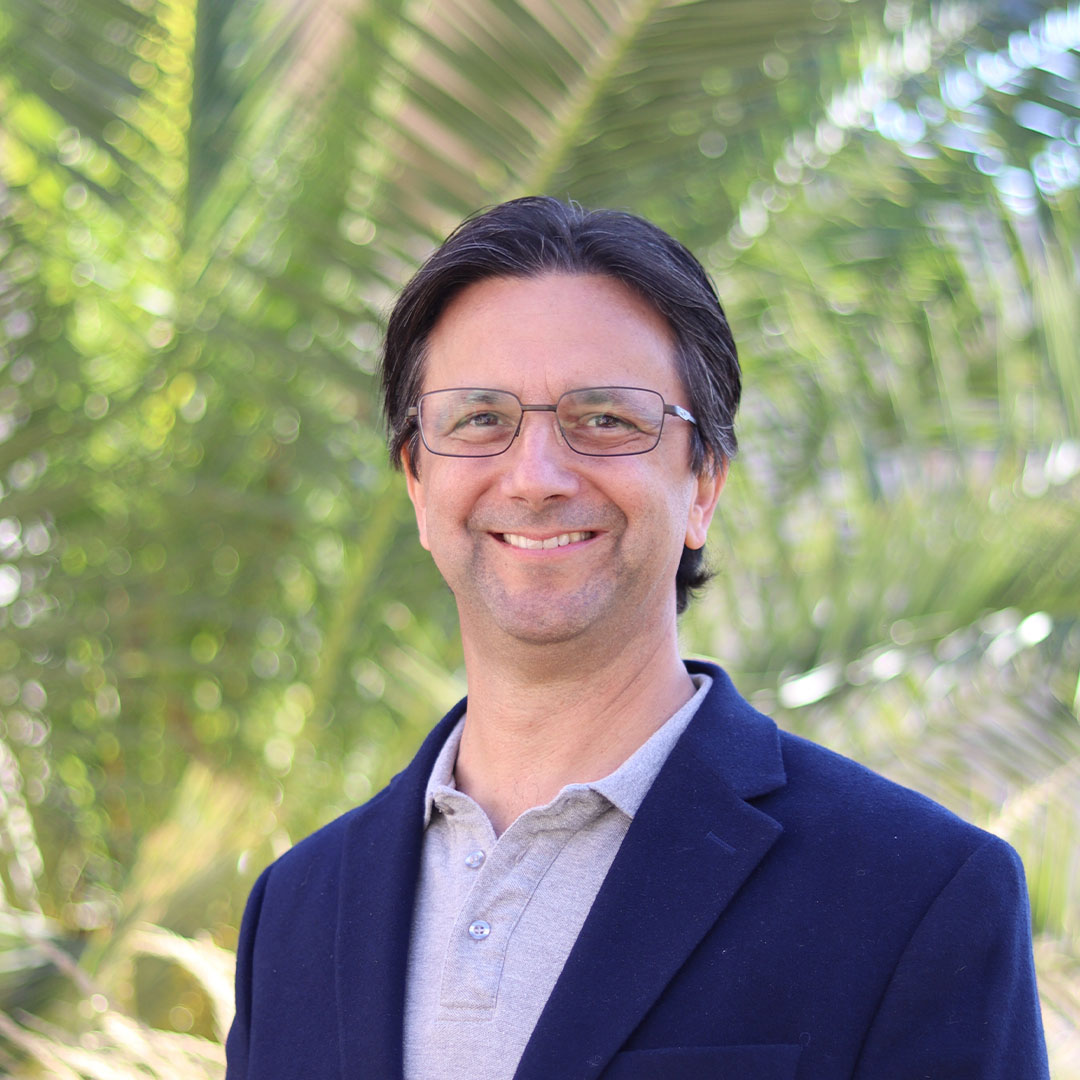
Pastor Robb has been the pastor-teacher of DHBC since March 2011. He earned a Master of Divinity (M.Div.) degree from The Master’s Seminary in Sun Valley, CA, and a Doctor of Philosophy (Ph.D.) degree from The Southern Baptist Theological Seminary in Louisville, KY. Pastor Robb and his wife Randi have been married for over twenty years and have four children: two daughters and two sons. They enjoy travel, hiking, baseball, and the beach.
One of Pastor Robb’s favorite verses is 1 Corinthians 1:18: “For the word of the cross is foolishness to those who are perishing, but to us who are being saved it is the power of God.” In addition to preaching weekly, Pastor Robb enjoys hosting the podcast Relentlessly Biblical. You can find him on X at @RobbBrunansky.