One fascinating feature of Scripture’s presentation in the Kingdom of God is that this phrase never occurs in the Old Testament.
The Kingdom of God in the Old Testament is presented to readers in types and shadow. Because of this reality, two things happen in the New Testament. The first is that people misunderstand God’s Kingdom. When Jesus did not fit their preconceptions of what the Kingdom would be like, they rejected Him as a fraud. The second is that the Kingdom of God would be considered a mystery. Jesus the Messiah had to come as the King to explain the meaning and nature of God’s Kingdom. Only those with ears to hear and eyes to see could discern it.
When Jesus arrived on the scene, the King had finally come into the world. Yet no part of His story went according to the expected plan. No one, not even the disciples, predicted that the Messianic King would come to be rejected, die and rise again, and then ascend to heaven without bringing some revolutionary political change to earthly kingdoms. So, how should we understand the Kingdom of God when the King is not on earth ruling a political kingdom but seated on a heavenly throne?
Jesus knew we would wrestle with these questions. As such, He spent much of His ministry explaining God’s Kingdom to His disciples. In fact, as many scholars have noted, the Kingdom of God is the central theme of Christ’s teaching, where He referenced “the Kingdom of God” 126 times in the four Gospels. In addition, He often spoke about the Kingdom using other related terms, such as “eternal life” in the Gospel of John.
We can begin to formulate an understanding of what Jesus taught about the Kingdom if we divide up His teaching into three parts.
The Kingdom Plan
We know what the human plan for the Kingdom was from the perspective of the people of Jesus’ day. They were ready for the Messiah to liberate them from bondage to Rome, taking His seat on the Davidic throne and beginning to rule. That, of course, is not what happened. Rather than taking His seat on the throne, Jesus was nailed to a cross. However, if the people had been listening to Christ’s teaching, they would have understood this was the Kingdom plan all along, which would roll out in three phases.
Jesus was clear that when He came, God’s Kingdom had arrived in Him. In fact, even before Christ began His public ministry, John the Baptist made this point clear (Matthew 3:1-2). Jesus began His ministry by declaring the Kingdom of heaven had come near in Him (Matthew 4:17).
Additionally, God’s Kingdom was present through Jesus’ ministry. This Kingdom was not something to wait for in the future only, but something they could presently observe by looking at the King standing before them (Matthew 12:28). In another passage, Jesus negates two things about the kingdom, that it is not coming with signs to be observed, and that it is not bound by geographical place (Luke 17:20-21). Instead, because Jesus is the King, and because everything is His domain, His Kingdom is wherever He is. People didn’t need to look to the stars for signs or go to Jerusalem to the temple; they simply needed to go to Jesus to see the Kingdom.
Jesus explained that the Kingdom would make progress throughout this world while He was reigning from heaven. This truth is clearly seen in our Lord’s parables. God’s Kingdom would have an inauspicious beginning – small and seemingly insignificant. However, this kingdom, which seemed to have no power or influence, would grow so large that it would be larger than the other garden plants, and that the birds would come to nest in its branches (Matthew 13:31-32). There would be no stopping the Kingdom of God. Once Jesus is seated on His throne, ruling over the Kingdom from heaven, God’s Kingdom would conquer all and be victorious, even if this victory looks impossible (Matthew 13:33). This Kingdom would make progress in the world, transforming hearts – and ultimately, at Christ’s return, the entire cosmos itself.
The progress of the Kingdom takes place through the preaching of the gospel (Matthew 24:14). This is such a critical truth to understand because many today think they can push the Kingdom forward through political action or earthly power. Jesus here, though, reminds us that the Kingdom of God does not make progress through political means. Instead, God’s Kingdom advances through proclamation of the good news of salvation for sinners from every nation.
The present form of the Kingdom – a multinational people saved by Christ’s power in the gospel but not an earthly geopolitical state – is not the final form of the Kingdom of God; there is yet more to come. Our Lord commanded us to pray for the coming of the Kingdom, which reminds us that its fullness is yet future (Matthew 6:10). Jesus also made this point through a parable to explain that the final form of the Kingdom was yet to come in a distant future (Luke 19:11-15). The King has gone away to receive the Kingdom, but He is coming back. When He returns, judgment will fall, accounts will be given, rewards and punishments will be bestowed, and the Kingdom will come in its fullness and glory.
The Kingdom Participants
Not everyone will participate in Jesus’ Kingdom; some will be cast outside. There are some characteristics of Jesus’ kingdom citizens:
While tragically many who think they are entering the kingdom will be sent to eternal condemnation (Matthew 7:21-23), true kingdom participants can be identified as those who are born again, righteous in the sight of God, and childlike in their trust of Christ.
The Kingdom Priority
Nothing is more precious than the kingdom of God, and so nothing should be a greater priority for kingdom citizens than this kingdom. It is more valuable than our property, bank accounts, combined assets, and even our own lives (Matthew 13:44). It’s like a pearl of inestimable value (Mathew 13:45-46). There is no earthly treasure worth hanging onto in exchange for the Kingdom (Matthew 6:33). Christ’s Kingdom should consume our time, thoughts, efforts, and energy. Seeking first this Kingdom isn’t sacrificing anything; rather, we gain everything through the pursuit of the Kingdom of God.
Do we understand the preciousness of the Kingdom of God? Do we pursue this kingdom, pray for this kingdom to come, and persevere in hope for its arrival? Do we seek first the Kingdom of God? Are the things of Christ our priority? Or do we hope to find a few minutes to squeeze Christ and His kingdom into our busy schedules? Because Christ calls us to seek first His kingdom, we must make the kingdom our highest priority.

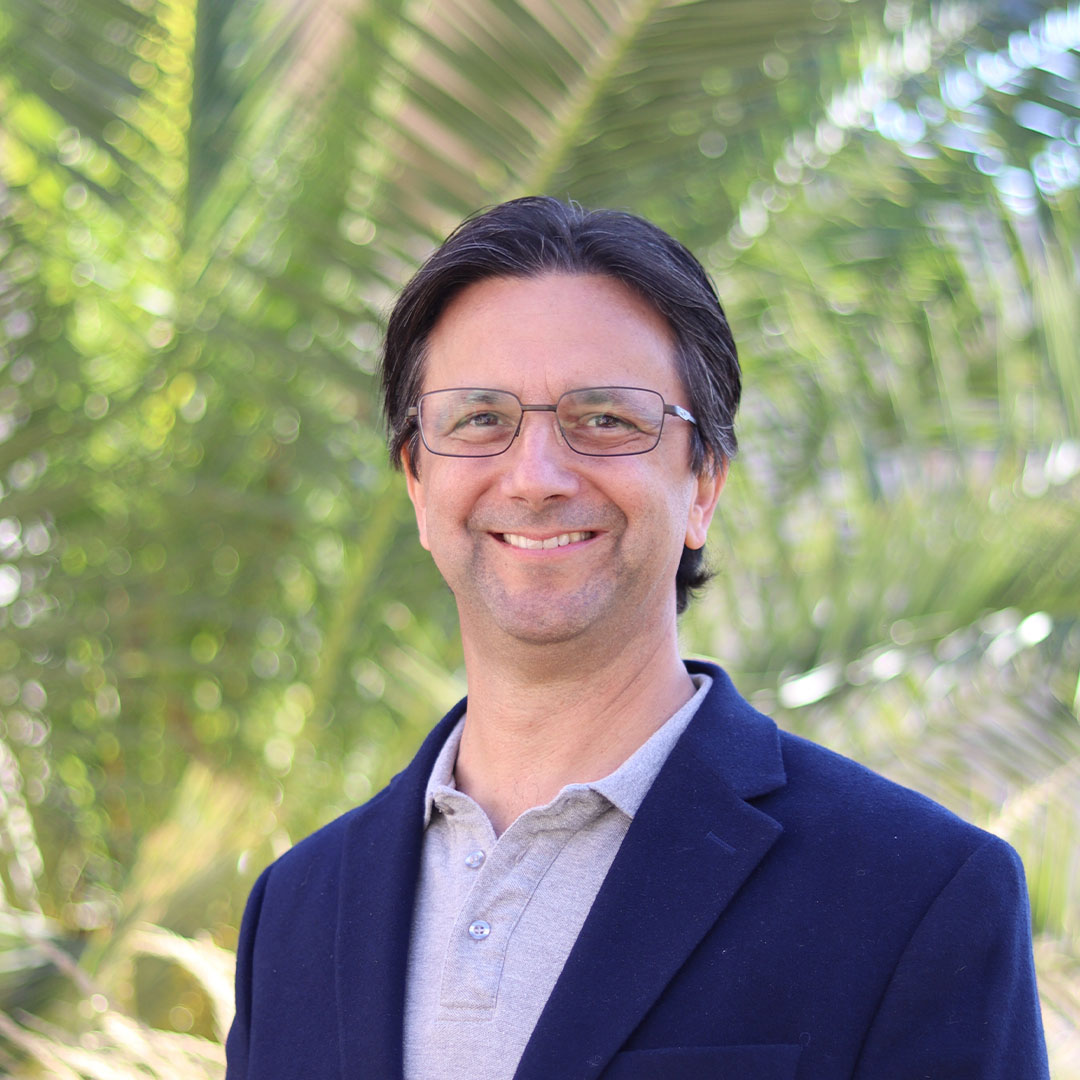
Pastor Robb has been the pastor-teacher of DHBC since March 2011. He earned a Master of Divinity (M.Div.) degree from The Master’s Seminary in Sun Valley, CA, and a Doctor of Philosophy (Ph.D.) degree from The Southern Baptist Theological Seminary in Louisville, KY. Pastor Robb and his wife Randi have been married for over twenty years and have four children: two daughters and two sons. They enjoy travel, hiking, baseball, and the beach.
One of Pastor Robb’s favorite verses is 1 Corinthians 1:18: “For the word of the cross is foolishness to those who are perishing, but to us who are being saved it is the power of God.” In addition to preaching weekly, Pastor Robb enjoys hosting the podcast Relentlessly Biblical. You can find him on X at @RobbBrunansky.