God’s covenant promises to bless all nations and establish His kingdom through a king from David’s line are central to Scripture. Yet, to fulfill these promises, God had to overcome two significant obstacles: the absence of a worthy king and the present corruption of the created order.
Obstacle 1: No Qualified King
The first problem to overcome is the lack of a qualified king. All the kings of Israel and Judah were inadequate because they were fallen men. Old Testament prophets often reflected upon this problem, recognizing the true King of Israel was yet to arrive (Psalm 110:1, Isaiah 9:6-7, Jeremiah 23:5-6, Micah 5:2-4, Zechariah 9:9-10). If God’s kingdom was going to come, and His promises be fulfilled, He must provide a king who is eternal and sinless, who can bring forgiveness, righteousness, and salvation, and who will reign not only over Israel but over all the nations of the world.
Obstacle 2: A Fallen Creation
The second obstacle God needed to overcome to bring His eternal kingdom into creation is the current condition of creation. As God’s old covenant people reflected on His promises, they realized the current created order was inadequate for the Lord’s kingdom promises to be fulfilled because of the Fall. God’s promises could never be enjoyed fully in a world under the curse. The Lord’s promises needed a new creation where His people could live with Him forever because these promises were so immense, glorious, and marvelous (Zechariah 14:9-11, Micah 4:1-4, Isaiah 33:17-24).
Jesus: The True King
These obstacles set a formidable standard for the true King. He must be a King who is sinless and eternal, and yet somehow descended from David’s line. Furthermore, He must be a King who could usher in new creation where the fullness of God’s blessings could be experienced and enjoyed by His people eternally.
Jesus stands apart as the uniquely qualified true King. He is not corrupted by fallenness but is perfectly righteous. Furthermore, Jesus proved He could transcend the old creation and bring about a new creation for His people to enjoy His beauty throughout eternity. His qualifications are evident in four key aspects: His birth, miracles, death and resurrection, and ascension.
Jesus’ birth indicates His royal pedigree and unique qualifications to be the Messianic King. Matthew’s Gospel presents Him as the anointed King – the Messiah, who fulfills the Lord’s covenant promises and is very God in human flesh (Matthew 1:1-23). Luke emphasizes His reign on David’s throne as the true heir of David’s dynasty. The Third Gospel also shows that Jesus is connected to the new creation through the Spirit’s work in His conception. The Messiah’s birth signals He is the unique King who has come to reign over God’s eternal kingdom, bring that kingdom into the created order, and defeat the dominion of darkness.
Jesus’ miracles demonstrate His power to bring God’s kingdom. None of Christ’s miracles were haphazard or random but had a particular kingdom purpose. Each miracle was connected to something relevant that was promised in the coming kingdom or that fulfilled something where a previous person or entity had failed. These miracles can be grouped under three headings.
The great promise God’s people were looking forward to under the old covenant was the removal of the curse, forgiveness of sins, and provision of a righteousness that met the Lord’s perfect standard. Christ’s death provided these benefits in fulfillment of God’s promise in the prophets. By dying on a tree, Christ removed our curse and made us new (Galatians 3:13). Through His shed blood, Jesus provided forgiveness of sins (Matthew 26:28). Lastly, Jesus lived a sinless life and died an obedient death to justify us and provide us with the righteousness required to stand accepted before God (Romans 5:18).
His resurrection, however, must also be combined with His death because these two acts should always be viewed as two pieces of the whole. His resurrection was His justification, that He was God’s Son, the righteous One, who was unjustly sentenced to death. Through His resurrection, Jesus became the first man to be raised in the new creation (Colossians 1:18, 1 Corinthians 15:20-21). Just as Adam was the first man of the old creation, Jesus is the first man of the new creation; but Christ will never fail as Adam did, and we know that because He triumphed through His death and resurrection.
In one sense, Christ’s ascension is most important, because we see He is now reigning from heaven over God’s kingdom. The kingdom of God is not on hold, nor is it something Jesus is waiting to establish. Christ is seated on the throne, and through His ascension, He has begun to reign.
Daniel tells us that at Jesus’ ascension, He began to reign over His kingdom at God the Father’s right hand, so He now has authority over heaven and earth (Daniel 7:13-14). Paul shows us Christ seated at the Father’s right hand, far above all authority, power, rule, and dominion (Ephesians 1:20-22). The writer to the Hebrews states that Jesus assumed His seat at the right hand of the throne of the Majesty in the heavens (Hebrews 8:1-6). The ascension of Christ establishes the present rule and reign of our Lord from heaven.
Conclusion
Christ is thus qualified to be the true Messianic King because of His birth, miracles, death and resurrection, and ascension. He is the sinless One who triumphs over Satan and sin, overcoming the obstacle of fallen kings. He is the first man of the new creation, who causes the new creation to penetrate back into this old creation, overcoming the obstacle of the fallen creation. Through Jesus, God’s kingdom is established, offering eternal blessings to His people.

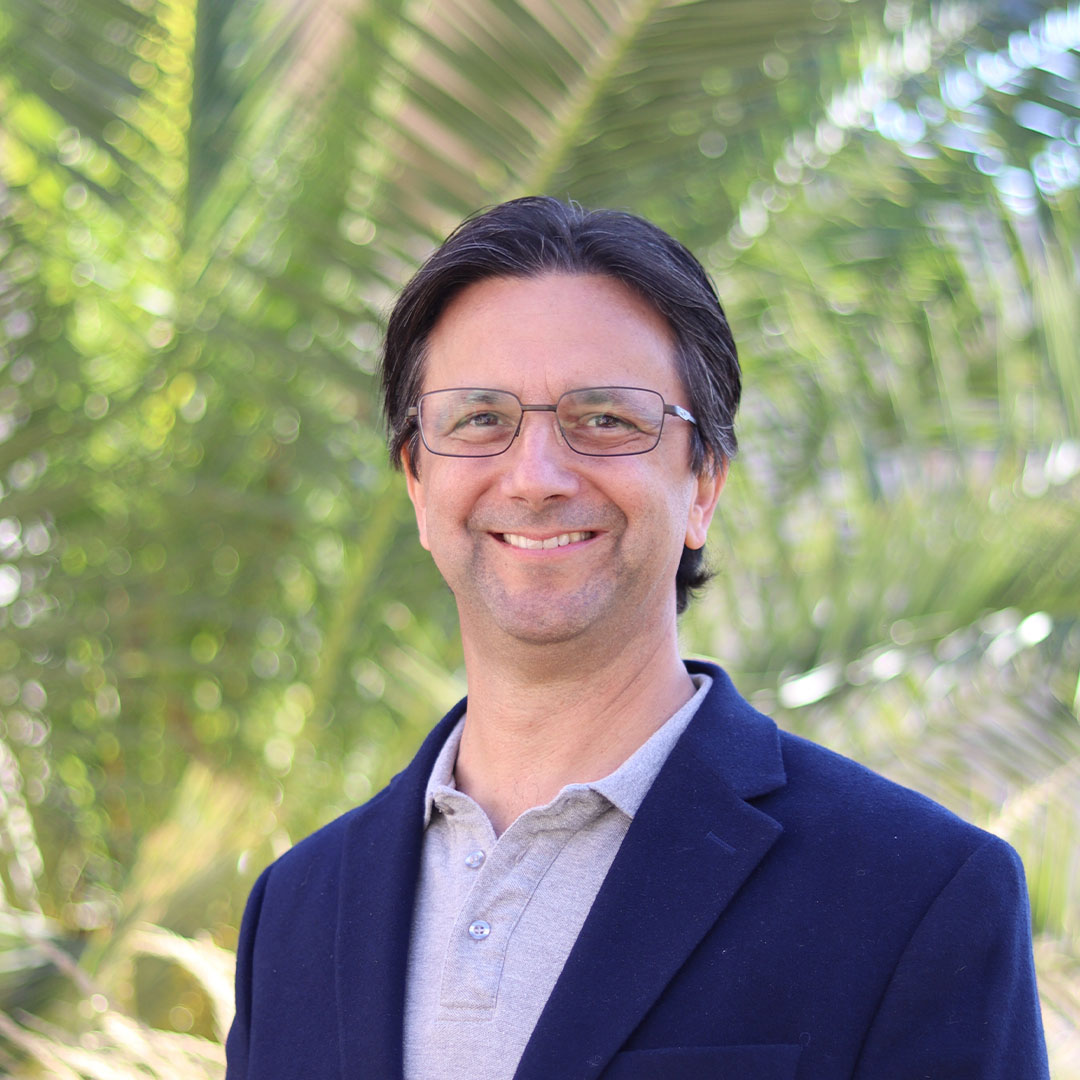
Pastor Robb has been the pastor-teacher of DHBC since March 2011. He earned a Master of Divinity (M.Div.) degree from The Master’s Seminary in Sun Valley, CA, and a Doctor of Philosophy (Ph.D.) degree from The Southern Baptist Theological Seminary in Louisville, KY. Pastor Robb and his wife Randi have been married for over twenty years and have four children: two daughters and two sons. They enjoy travel, hiking, baseball, and the beach.
One of Pastor Robb’s favorite verses is 1 Corinthians 1:18: “For the word of the cross is foolishness to those who are perishing, but to us who are being saved it is the power of God.” In addition to preaching weekly, Pastor Robb enjoys hosting the podcast Relentlessly Biblical. You can find him on X at @RobbBrunansky.